

Caution: Using the PI Star Rating in Predictive Index Hire
Learn why relying solely on the PI star rating in Predictive Index Hire can be misleading and discover practical ways to dig deeper into candidate...
3 min read

Harvard Business Review research highlights just how painful ineffective meetings can be:
71% of senior managers said meetings are unproductive and inefficient
Nearly one-third felt that meetings prevent them from completing their own work
Executives spend an average of 23 hours per week in meetings, yet many leave without clear next steps or actionable outcomes
These statistics underscore one simple truth: who leads a meeting matters as much as the meeting itself. Choosing the right chair — someone who can balance collaboration, structure, and engagement — can dramatically improve meeting outcomes, team alignment, and follow-through.
Low A (Collaborative, inclusive) is generally preferable for meeting chairs.
Why: Low A leaders encourage participation, create space for multiple voices, and prevent one person from dominating the agenda.
Consideration: They may need support to keep discussions moving and avoid excessive tangents.
Meeting impact: Greater engagement, better buy-in, and more creative solutions from the team.
High B can be situationally advantageous.
Why: A chair who is energetic and engaging can stimulate discussion and encourage quieter participants to speak up.
Consideration: High B should be calibrated so discussion doesn’t become chaotic or monopolized.
Meeting impact: Improved ideation, participation, and team energy, especially in strategic or brainstorming meetings.
Both high and low C have advantages depending on the meeting type:
High C (steady, process-oriented) chairs help keep longer meetings focused and maintain consistency.
Low C (fast-paced, flexible) chairs can drive quick decision-making and tolerate ambiguity in strategic discussions.
Meeting impact: Choosing the right C level helps ensure the pace matches the meeting’s purpose.
High D is arguably the most important factor for a chair.
Why: High D ensures meetings follow a clear process, agendas are respected, and discussions produce outcomes.
Consideration: High D chairs prevent meetings from being canceled, lost in tangents, or lacking closure.
Meeting impact: Consistent delivery, actionable outcomes, and reliability in follow-up — all critical for organizational productivity.
Low A + High D → Encourages collaboration while ensuring the meeting stays structured, on track, and accountable.
Low A + Situational High B → Facilitates engagement and ideation while preserving collaboration and participation.
High D + High/Moderate C → Balances structured processes with an appropriate pace, ensuring that meetings are productive and decisions are executed.
Effective meetings go beyond the chair — they require operating norms and process discipline. Chairs should embed these practices to maximize impact:
Set Clear Meeting Goals
Every meeting should have a defined purpose: decision-making, problem-solving, alignment, or brainstorming.
Chairs should articulate the objective at the start.
Develop Ground Rules
Norms for participation, timing, decision-making, and respectful debate help ensure meetings are productive.
Scorecard & Metrics Reviews
Use quick data or KPI reviews to focus discussions on results rather than anecdote.
Action Follow-Up
Every meeting should produce actionable next steps, assigned owners, and deadlines.
Chairs should ensure these are documented and tracked.
Structured Problem-Solving
Use frameworks or agendas to guide the team through complex decisions without losing momentum.
Encourage ideation before evaluation, balancing High B creativity with High D structure.
Regularly Reinforce Norms
At the start of each meeting, briefly remind participants of expectations for participation, decision-making, and process.
Low A chairs are often most effective — they foster participation, collaboration, and creative input.
High D ensures consistency — critical for keeping meetings structured, productive, and reliable.
High B can be situationally beneficial — energizes discussions and encourages engagement, particularly in brainstorming or strategic sessions.
C factor should align with the meeting’s pace — higher C for steady, longer discussions; lower C for quick, high-energy problem-solving.
Factor combinations matter — low A + high D is often ideal; situational High B can add energy without losing structure.
Meeting operating norms are essential — clear goals, ground rules, scorecards, action follow-up, and structured problem-solving practices improve both effectiveness and accountability.
Choosing the right chair is not about hierarchy or personality — it’s about behavioral fit for the meeting’s purpose. When done right, meetings become engines of alignment, decision-making, and organizational progress.
.jpeg)
Learn why relying solely on the PI star rating in Predictive Index Hire can be misleading and discover practical ways to dig deeper into candidate...
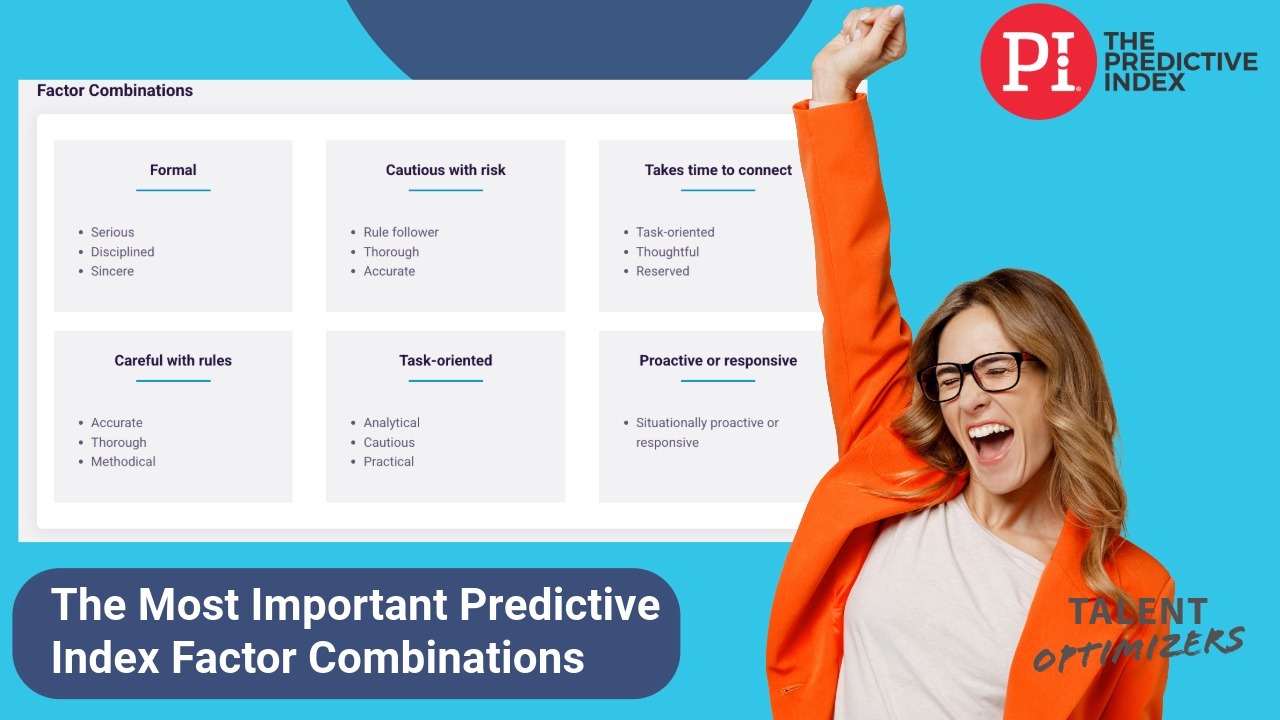
Explore the most important Predictive Index factor combinations and what each pairing reveals about how someone will approach their work.

High-performing teams don’t start with offsites. Learn how a data-driven approach to team development creates focus, alignment, and measurable ROI.