

The #1 Employee Engagement Survey Backed by Science (PI Diagnose Review)
Discover how PI Diagnose compares to Lattice, CultureAmp, Glint, Gallup, and Qualtrics—and why this science-backed engagement survey drives real...
2 min read
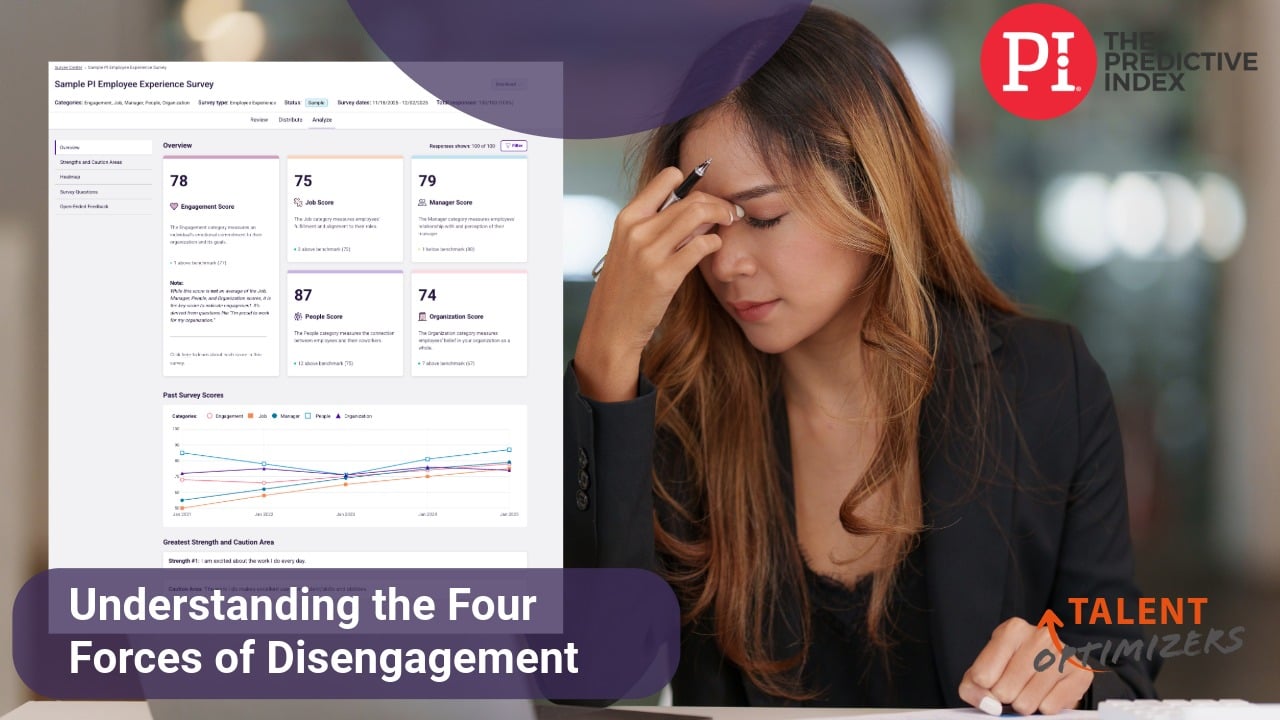
Employee engagement isn’t a luxury — it’s a strategic necessity. Highly engaged teams deliver better customer experiences, outperform competitors, and are far more likely to stay with your company long-term. But what happens when engagement falters — and employees stop giving their best? According to Predictive Index research, it often comes down to the Four Forces of Disengagement: mismatches between an employee and their job, manager, team, or organization.
Disengagement doesn’t occur in a vacuum. It usually stems from situations where an employee feels misaligned in critical areas of their work experience:
Poor Job Fit — When someone’s natural strengths and behavioral tendencies don’t align with their role responsibilities, frustration increases and motivation declines.
Manager Misalignment — An employee’s direct relationship with their manager is one of the strongest predictors of engagement. When leadership style doesn’t match what an employee needs, engagement drops.
Team Fit Issues — Feeling unlike the people on your team — or isolated from your colleagues — can significantly reduce a sense of belonging and engagement.
Organization/Culture Misalignment — When company values, expectations, or culture don’t align with an employee’s identity or expectations, meaningful emotional commitment becomes difficult.
Employees facing these forces may do only the bare minimum — just enough to keep their job — rather than contributing discretionary effort that drives business success.
This is where the Predictive Index Diagnose Employee Experience Survey™ comes in. Diagnose helps organizations measure engagement and uncover the root causes of disengagement by assessing these four forces across teams.
Using science-backed survey tools, you can pinpoint precisely whether job fit, manager fit, team dynamics, or organizational culture is contributing to engagement gaps. Diagnose doesn’t stop at reporting — it provides action plans and prioritized recommendations so you know what to fix first.
👉 Learn more about PI Diagnose and how it measures the four forces of disengagement here: https://www.predictiveindex.com/software/diagnose-engagement/
Addressing disengagement is not just about understanding the problem — it’s about taking action, and the full Predictive Index platform gives you the tools to do just that:
PI Hire: Improve job fit from the start by hiring the right people for the right roles, reducing the likelihood of mismatch and disengagement.
PI Design: Structure roles and teams effectively — so responsibilities align with strengths and team dynamics support engagement.
PI Inspire: Help managers run better coaching and development conversations that build trust, alignment, and a sense of growth.
Together, these modules form a holistic Talent Optimization strategy — diagnose disengagement, hire right, design roles that fit, and lead with insight.
.jpeg)
Discover how PI Diagnose compares to Lattice, CultureAmp, Glint, Gallup, and Qualtrics—and why this science-backed engagement survey drives real...
.jpeg)
Learn why relying solely on the PI star rating in Predictive Index Hire can be misleading and discover practical ways to dig deeper into candidate...
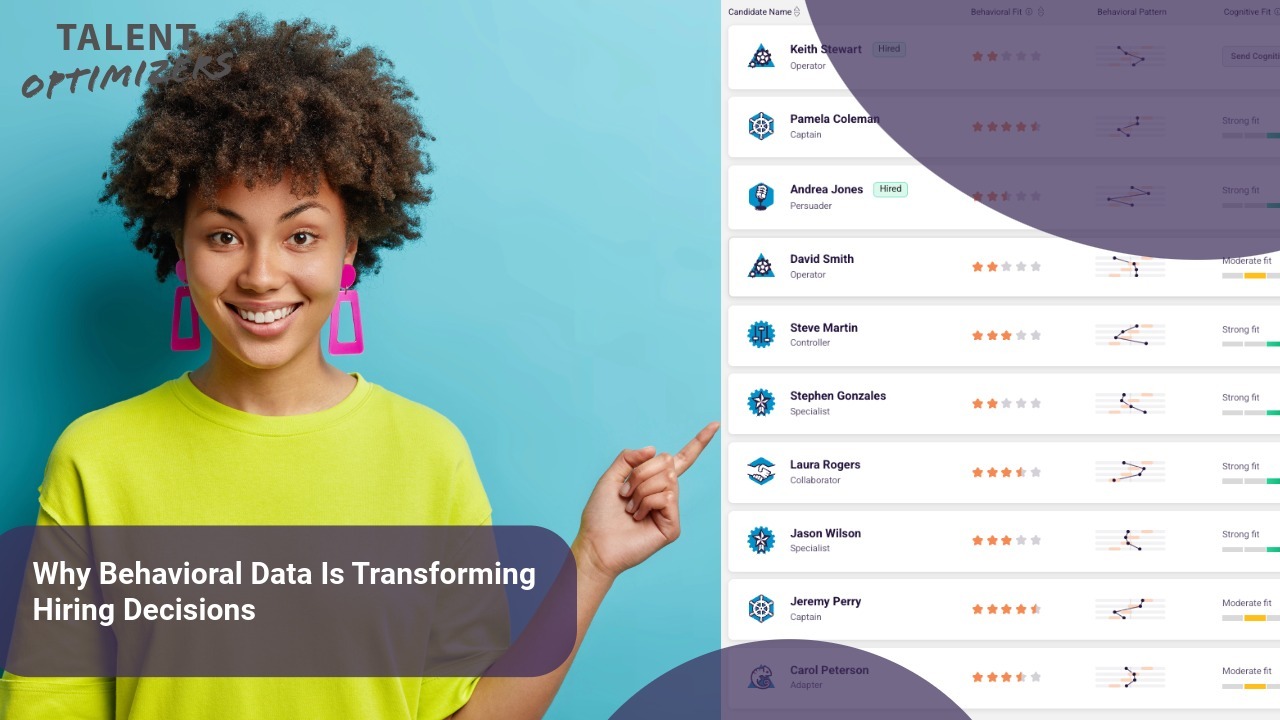
Discover how behavioral data improves hiring success, engagement, and retention. Learn practical strategies and book a free Behavioral Hiring...