

3 min read
Introducing the Predictive Index Cognitive Assessment
Introducing the Predictive Index Cognitive Assessment Welcome to Tools of Talent Optimization, where we break down the key Predictive Index modules...
3 min read

When it comes to understanding workplace behavior, simplicity matters. That’s where the Predictive Index (PI) Reference Profiles stand out.
Reference Profiles are a shorthand way to interpret the more complex four-factor model behind PI:
Dominance (A) – drive for results and control
Extraversion (B) – social energy and communication
Patience (C) – pace, consistency, and steadiness
Formality (D) – structure, rules, and precision
Rather than forcing leaders, managers, and individuals to memorize endless factor combinations, PI Reference Profiles group behavioral patterns into easy-to-remember profiles that make behavior practical and actionable from day one.
Each PI Reference Profile falls into one of four easy-to-understand categories:
1. Analytical (Hexagon symbol)
Focused, precise, data-driven
Prefer logic, accuracy, and careful decision-making
2. Stabilizing (Circle symbol)
Calm, consistent, steady
Thrive in predictable environments and supportive teamwork
3. Social (Triangle symbol)
Outgoing, persuasive, relationship-driven
Energized by interaction and collaboration
4. Persistent (Cog symbol)
Determined, structured, disciplined
Comfortable taking control and driving execution
These categories make it easy to spot behavior patterns at a glance.
Each profile is linked to a simple, visual symbol:
🔺 Triangle – Social
⚙️ Cog – Persistent
⚪ Circle – Stabilizing
⬡ Hexagon – Analytical
These icons give people a visual shortcut to quickly remember how someone is likely to work and communicate.
One of PI’s biggest differentiators is how Reference Profiles connect directly to the PI Design tool.
Each profile naturally fits into one of four strategic quadrants:
Teamwork & Employee Experience
Innovation & Agility
Process & Procedure
Results & Discipline
This makes it much easier to connect people strategy to business strategy in a way that most behavioral tools simply can’t.
Unlike many assessments that sit in a drawer after the debrief, the PI system creates a shared, usable language.
It’s easier to remember.
It’s easier to teach.
And it actually gets used.
That means faster adoption, better conversations, and real impact on performance.
Let’s say someone who hasn’t yet learned they are a Maverick needs information from a Scholar.
The Maverick naturally wants to walk up, interrupt, and brainstorm out loud. That feels productive to them.
But for the Scholar, this feels:
Disruptive
Frustrating
Stress-inducing
They prefer:
Time to reflect
Structured thinking
Fewer interruptions
Now imagine both people understand their Reference Profiles and how they work.
Instead of interrupting, the Maverick sends:
✅ A calendar invite
✅ A clear goal
✅ An agenda
✅ The data in advance
The result?
Better communication. Less friction. Faster alignment.
Reference Profiles are powerful, but not rigid.
People can be “stretching” at work — behaving differently due to role demands (see our Self-Concept video).
We can’t fit 8 billion people perfectly into 17 profiles — but segmentation makes the tool practical and usable.
Two people can share the same profile but still be different. Think of it like a town:
Same postal code (reference profile)
Different streets and house numbers (primary factors and intensities)
You’ve got two powerful options:
✅ Take a free Predictive Index Behavioral Assessment
✅ If you already know your Reference Profile, book a free Talent Strategy session
In this session, we’ll:
Map your team inside PI Design
Show where your team sits across the four strategic quadrants
Highlight how aligned your team is to your business goals
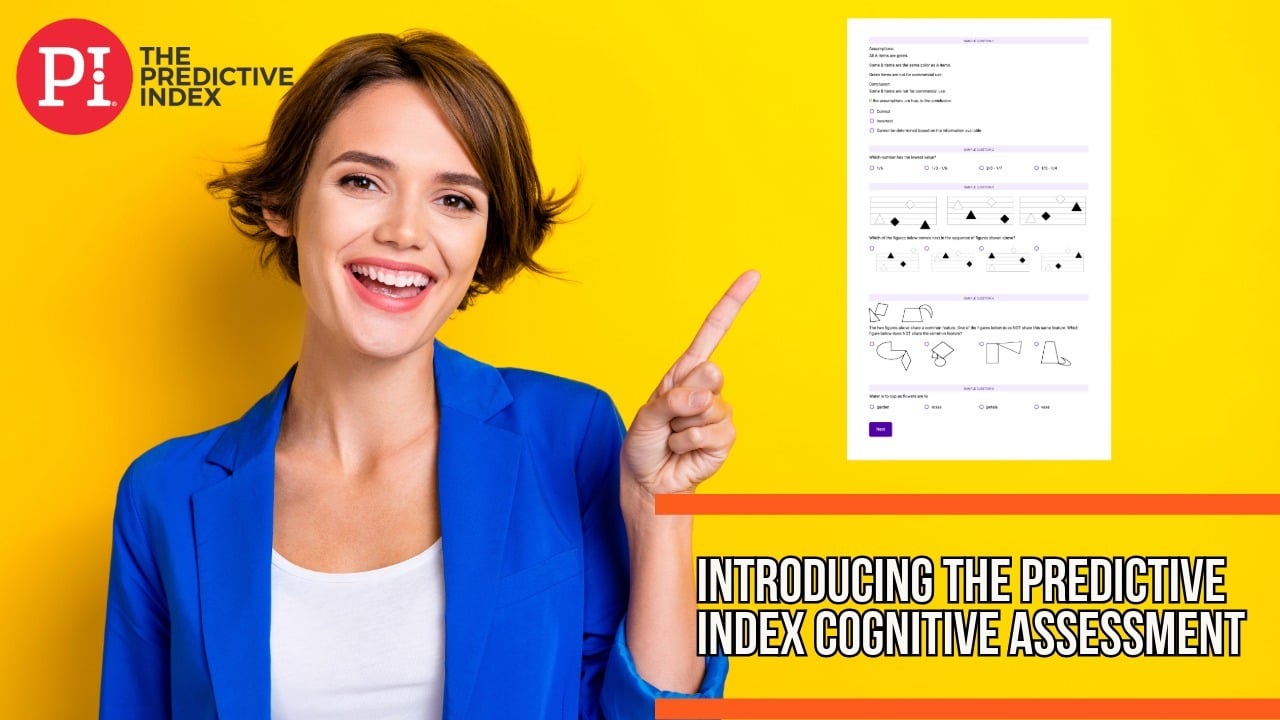
3 min read
Introducing the Predictive Index Cognitive Assessment Welcome to Tools of Talent Optimization, where we break down the key Predictive Index modules...
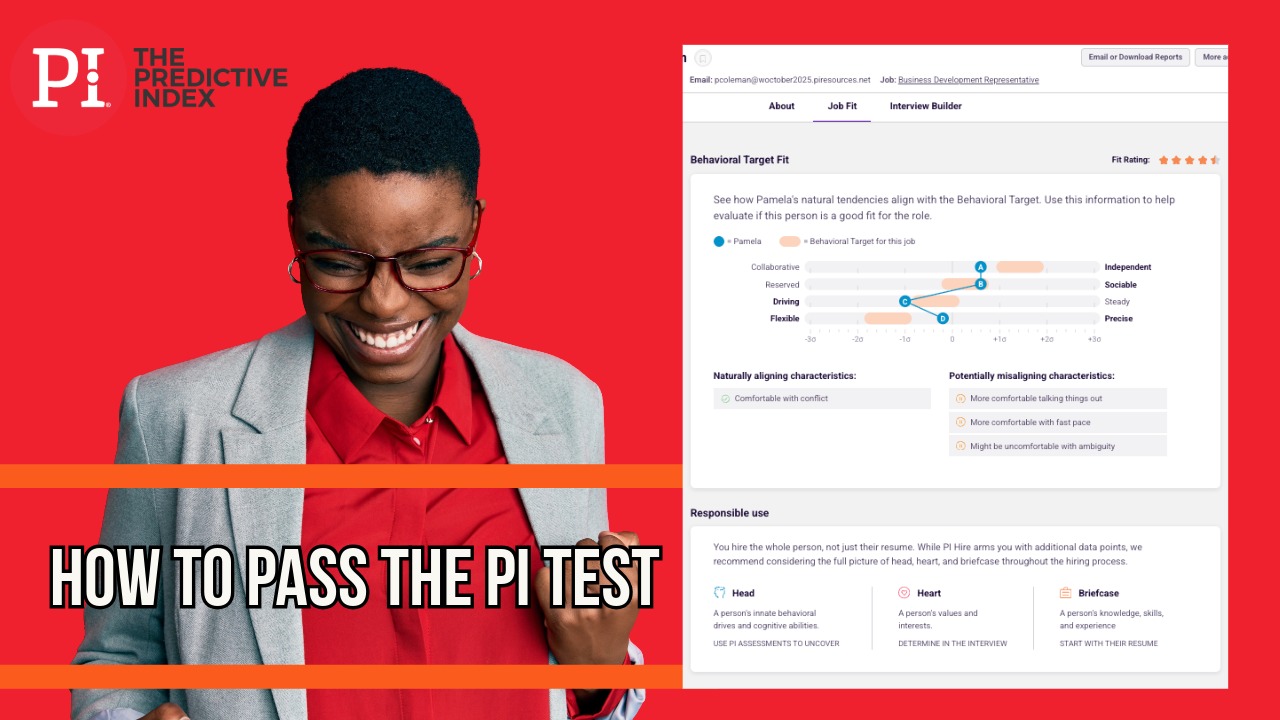
2 min read
How to Prepare and Succeed on the Predictive Index Assessment When it comes to understanding workplace behavior, simplicity matters. That’s where...
-1.jpeg)
3 min read
What is PI Hire? Welcome to Tools of Talent Optimization, where we break down the key Predictive Index modules and show how they solve real people...