
Is Your Leadership Style Too Nice?
Why being “nice” can undermine leadership effectiveness. Learn how the Last 8% and Predictive Index help leaders have tougher, higher-impact...
1 min read
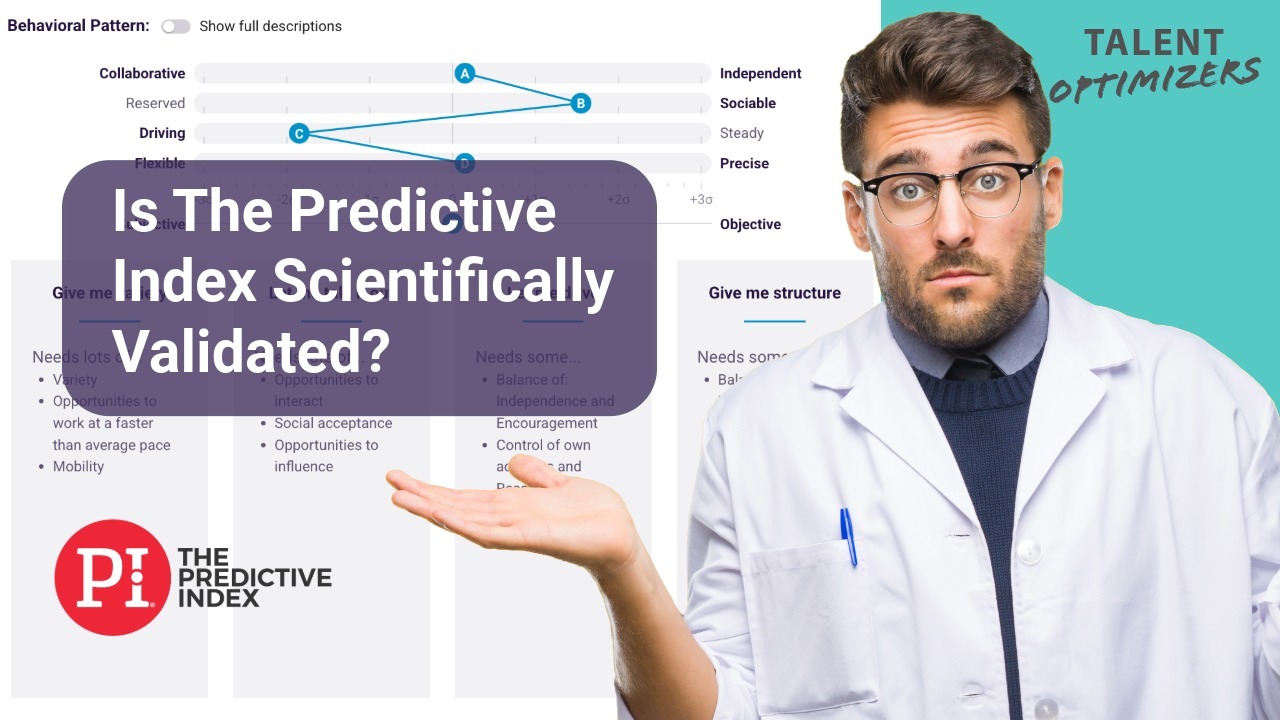
When organizations evaluate behavioral assessments, one of the most common questions is whether the tool is validated and professionally defensible. Predictive Index aligns with the standards established by the American Psychological Association (APA), the Society for Industrial and Organizational Psychology (SIOP), and the International Test Commission (ITC).
It’s important to note that these organizations do not certify or endorse individual assessments. Instead, they define the standards that assessments must meet in order to be considered scientifically sound, fair, and appropriate for workplace use.
The APA establishes standards related to:
Predictive Index aligns with APA standards by conducting ongoing validation studies, ensuring consistent measurement over time, and confirming that the assessment measures stable behavioral drives rather than transient traits.
SIOP focuses on assessments used in workplace and talent decisions. PI aligns with SIOP standards by:
This ensures PI supports defensible hiring, development, and team decisions.
The ITC sets international standards for ethical and fair assessment use. PI aligns with ITC guidelines by:
Alignment with APA, SIOP, and ITC standards means Predictive Index is:
For HR, Talent, and Legal teams, this alignment provides confidence that PI can be used responsibly to improve hiring, development, and organizational outcomes.
Why being “nice” can undermine leadership effectiveness. Learn how the Last 8% and Predictive Index help leaders have tougher, higher-impact...
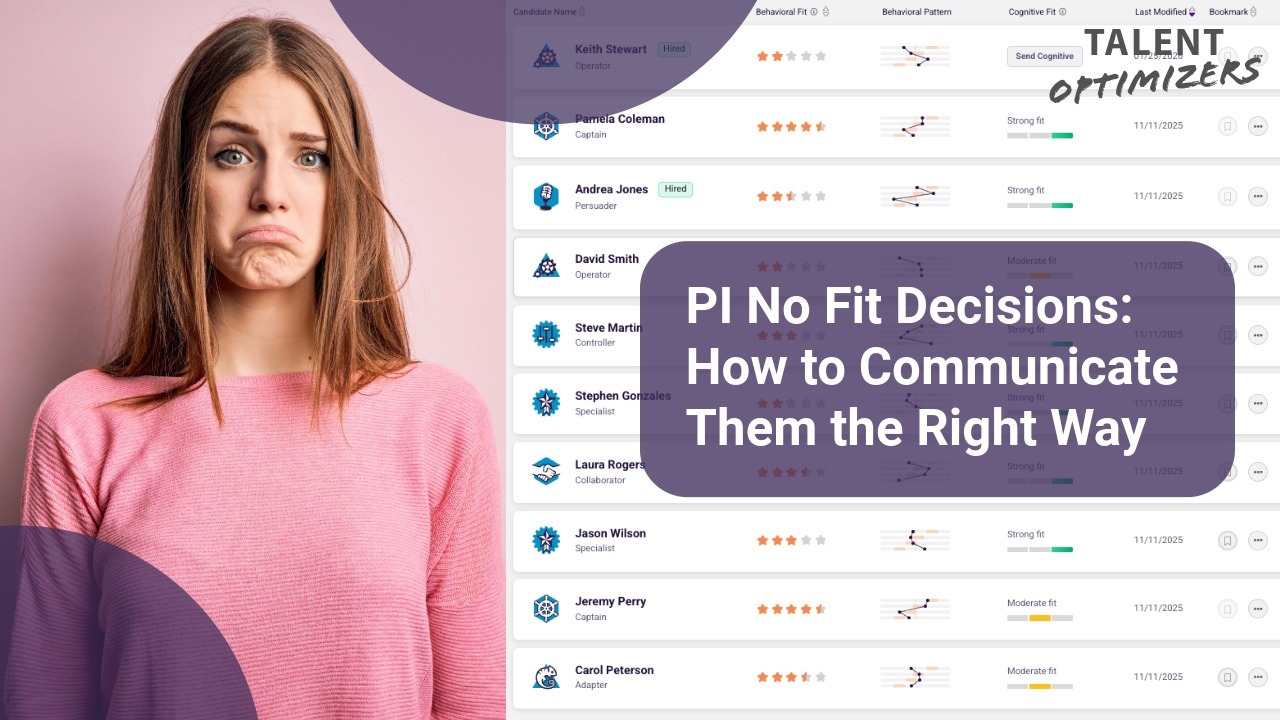
Learn how hiring managers can communicate Predictive Index “no fit” decisions humanely. Discover best practices for explaining role misalignment,...
Not a fit for a role based on your Predictive Index results? Learn what a PI “no fit” really means, why it happens, and what to do next to find roles...